Break-ins, copied keys, a househelp who "lost" the spare, a driver who still has the gate key from two years ago. If you live in Abuja, Lagos or anywhere else in Nigeria, you already know why people are looking at fingerprint and PIN door locks. The honest question is the one you are probably asking: is a smart door lock actually safe here — with our power, our heat and our dust?
This guide answers that straight, including the situations where a smart lock is the wrong choice.
Looking for prices? See our smart door lock price guide for Nigeria (2026).
How a Smart Door Lock Works
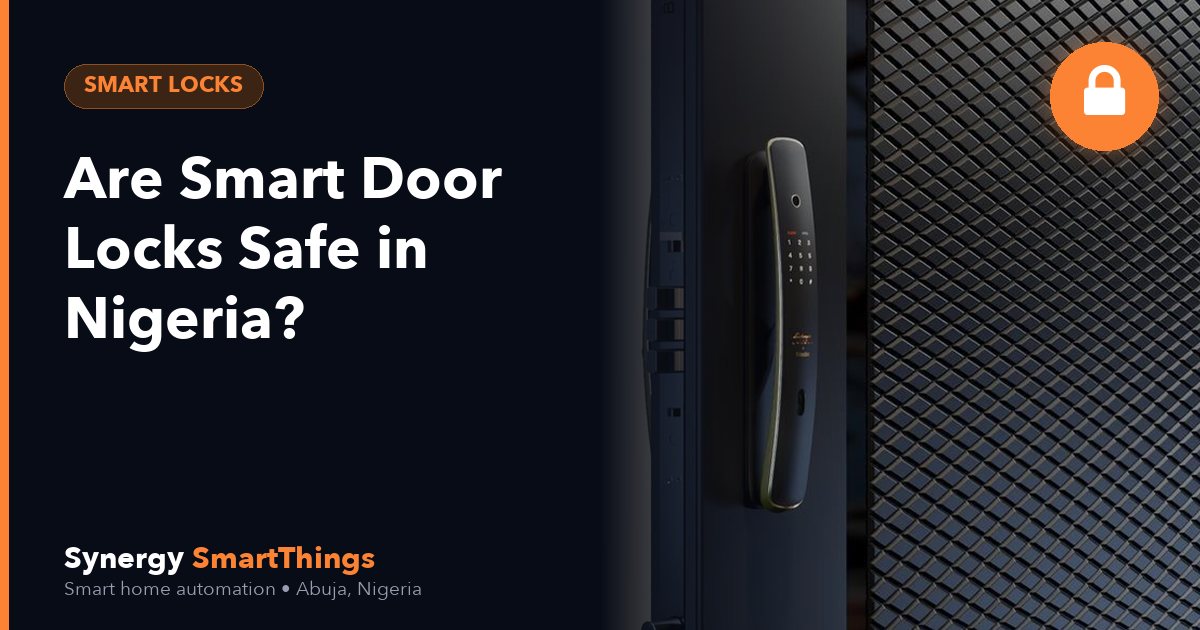
A smart lock replaces the lock set on your door. Instead of (or as well as) a key, you open the door with one or more of these:
- Fingerprint: the fastest option for the people who live in the home.
- PIN code: useful for visitors, workers and anyone whose fingerprint reads badly.
- Card or tag: handy for staff or tenants who should not need a phone.
- App or remote unlock: lets you open the door for a courier from wherever you are (this part needs internet).
- Mechanical key: nearly every good smart lock keeps a hidden key as a final backup.
The important point: the lock itself is battery powered. It does not depend on NEPA, your inverter or your Wi-Fi to let you in.
The Questions Nigerians Ask Most
"What happens when there is a power cut?"
Nothing changes. Because the lock runs on its own batteries, the fingerprint reader and keypad work the same at 3am during a blackout as they do at noon. What you lose when the internet is down is remote features, such as opening the door from your phone while you are away. Everyday entry still works.
"What if the battery dies and I am locked out?"
This is the number one fear, and a well-chosen lock handles it in three ways. First, it warns you well before the battery is empty, by sound, light or an app notification. Second, there is a mechanical key backup. Third, many models let you wake the lock briefly with a power bank or battery from outside the door. Ask which of these your exact model supports, and keep the spare key somewhere that is not the same bag as your phone. Set a reminder to change the batteries on a schedule, rather than waiting for the warning.
"Can someone hack it or copy my code?"
Be realistic here. A keypad code can be watched, so avoid obvious codes, change them when a worker leaves, and wipe the keypad if your model recommends it. Compare that with a metal key: anyone can copy a key in a market in minutes, and you will never know. With a smart lock you can delete a single person's access instantly, create a code that expires after a day, and (on many models) see a log of who opened the door and when. That is a real security improvement for homes with staff, drivers and regular tradespeople.
The unglamorous truth: a lock is only as strong as the door and frame it is fitted to. A smart lock on a weak door is still a weak door. We always look at the door, the frame and the strike plate before recommending a lock.
"Will it survive Harmattan dust, heat and rain?"
Quality matters a lot here. Fingerprint readers can struggle with very dry, dusty or wet fingers, which is exactly why a good lock also has a PIN and a key. If the lock faces the weather (a front door without a covered porch), choose a model that is rated for outdoor exposure, and avoid cheap unbranded locks of unknown origin: their internals tend to be the first thing to fail.
Who Benefits Most From a Smart Lock?
- Families with domestic staff or drivers: give each person their own code and remove it the day they leave. No more re-keying.
- Landlords and short-let hosts: change the guest code for each booking instead of meeting every guest with keys.
- Parents of school-age children: no more keys lost at school. Open with a fingerprint or code.
- Offices and shops: a record of who comes in, and instant removal of access when someone leaves.
Mistakes to Avoid
- Buying the cheapest unbranded lock online. Check the brand, the warranty and whether anyone in Nigeria can actually repair or replace it.
- Not checking the door first. Door material, thickness and the existing lock type decide what will fit. Steel security doors, wooden doors and aluminium doors all need different solutions.
- Drilling it yourself. A badly aligned lock jams. Let it be fitted and tested properly.
- Forgetting the backup key. Keep a mechanical key with a trusted person or in a safe place.
- Never updating codes. Review who has access every few months, and always after staff changes.
Quick Answers
What happens to a smart lock when NEPA takes light?
Nothing. It runs on its own batteries, so fingerprint, PIN and key all keep working. Only remote features that need the internet are affected.
What if the battery runs out?
Good locks warn you early and still open with a mechanical key. Many can also be woken briefly with an external power source. Confirm this for your model before buying.
Is a smart lock safer than a normal key?
Often yes, because you can remove one person's access instantly, which you can never do with a copied key. But the door and frame still matter just as much as the lock.
What a Smart Lock Costs
Prices depend on the brand, the features and your door, so there is no single number. A smart lock is included in our Plus Pro package, and we can also supply one on its own. For the wider picture of what a smart home costs in Nigeria, read our full pricing guide. You can also see what we offer on our Smart Lock & Access Control page.
Thinking About a Smart Lock for Your Door?
Send us a photo of your door and we will tell you which lock fits, what it needs and what it will cost — before you commit to anything.
Get Lock Advice on WhatsApp